Last updated November 21, 2026
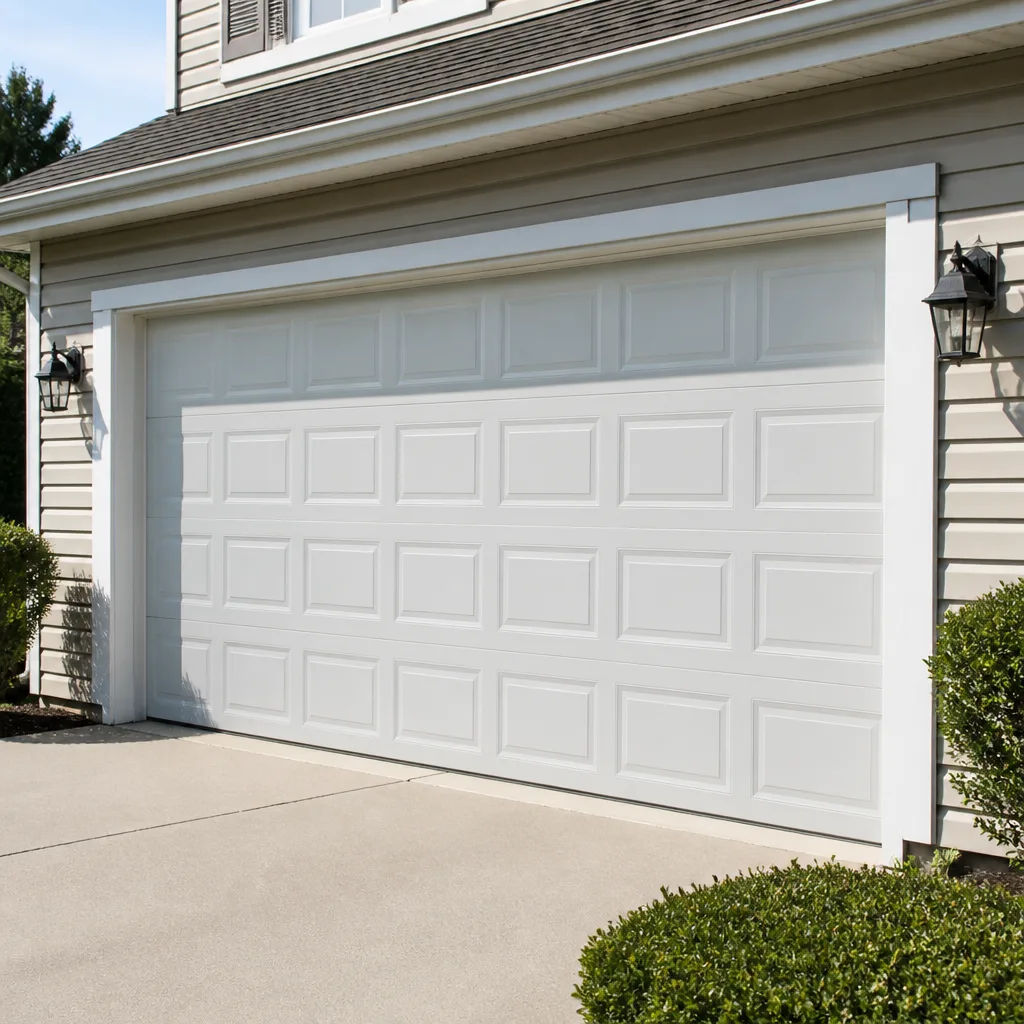 Raised-panel steel
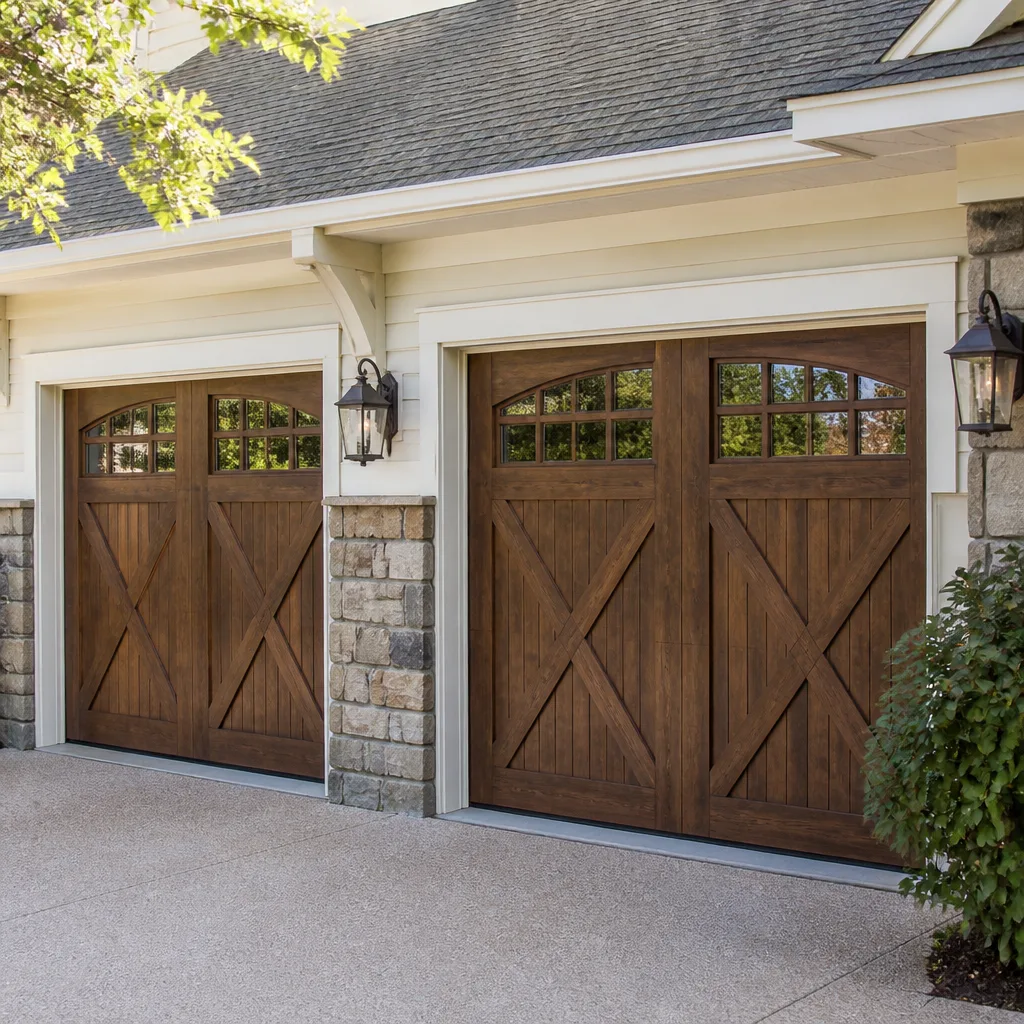 Carriage house
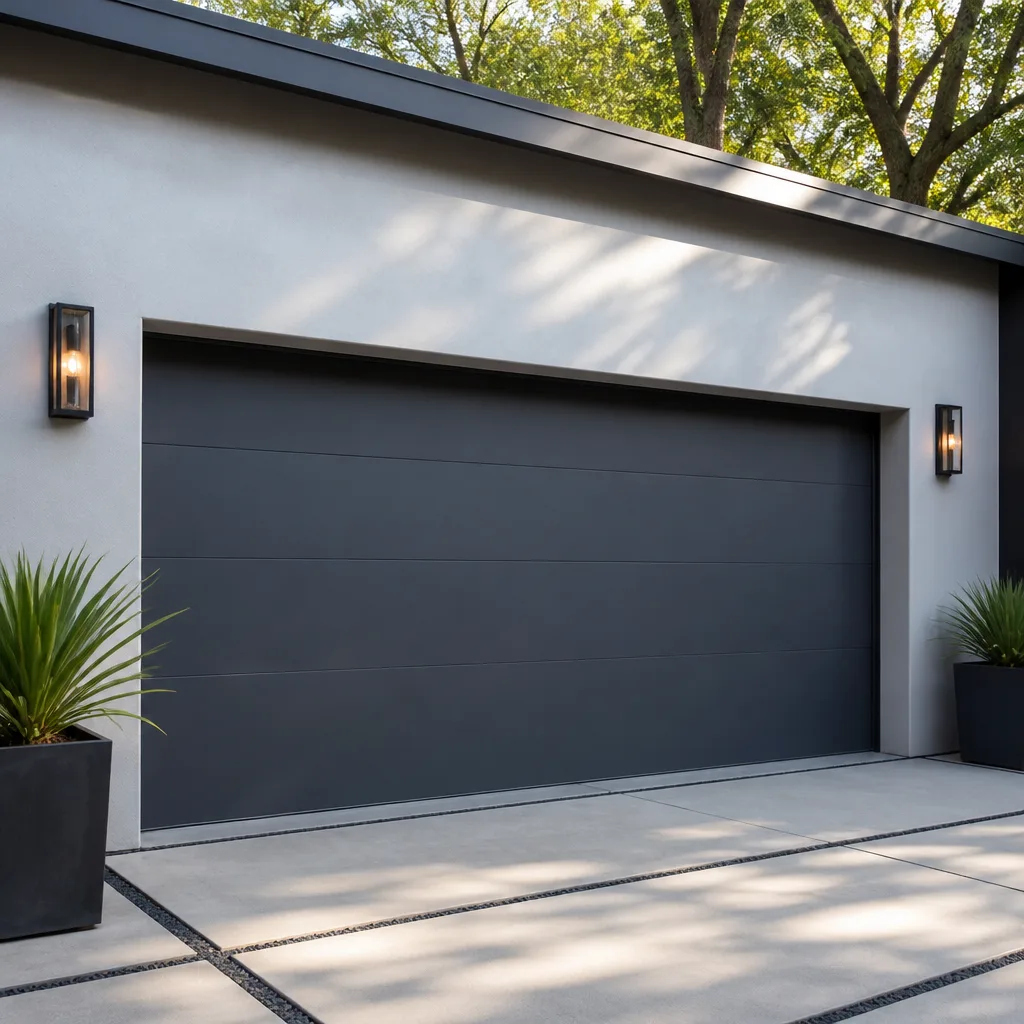 Modern flush
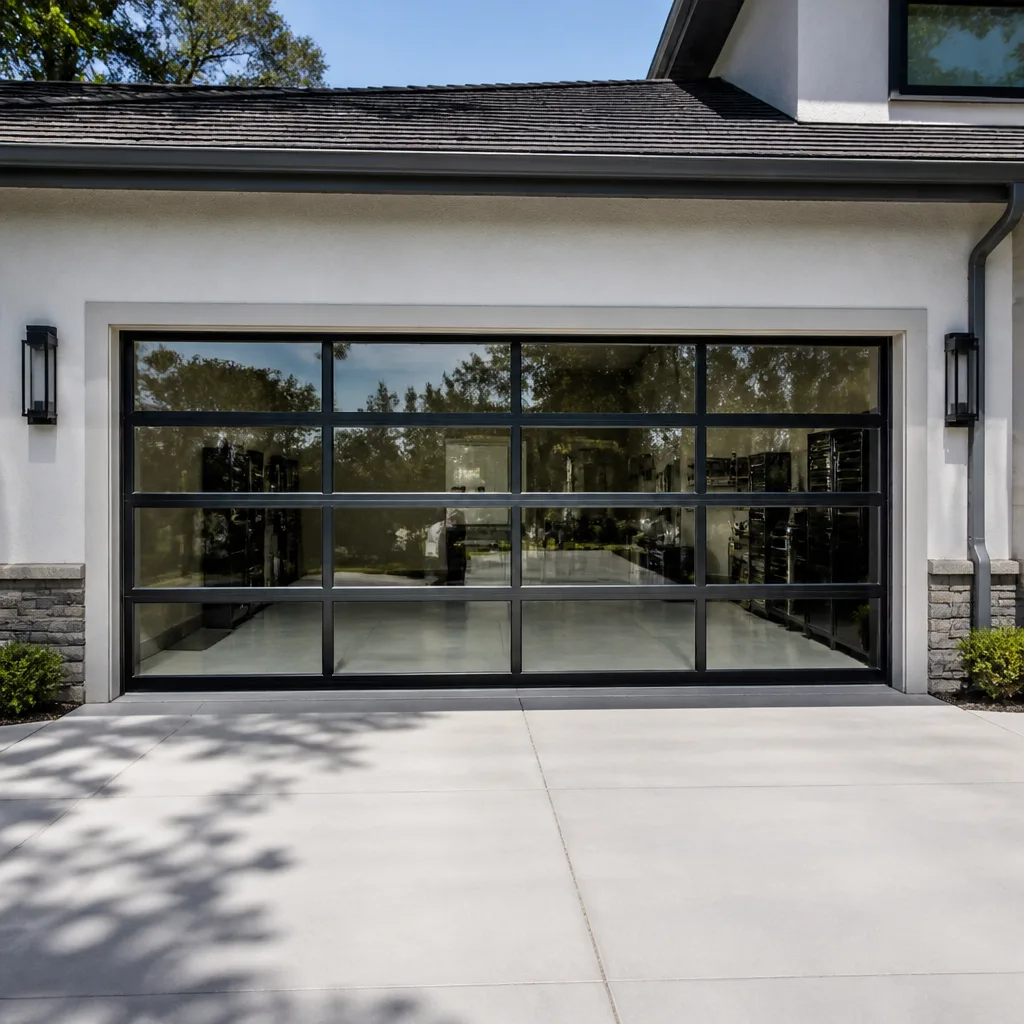 Full-view glass
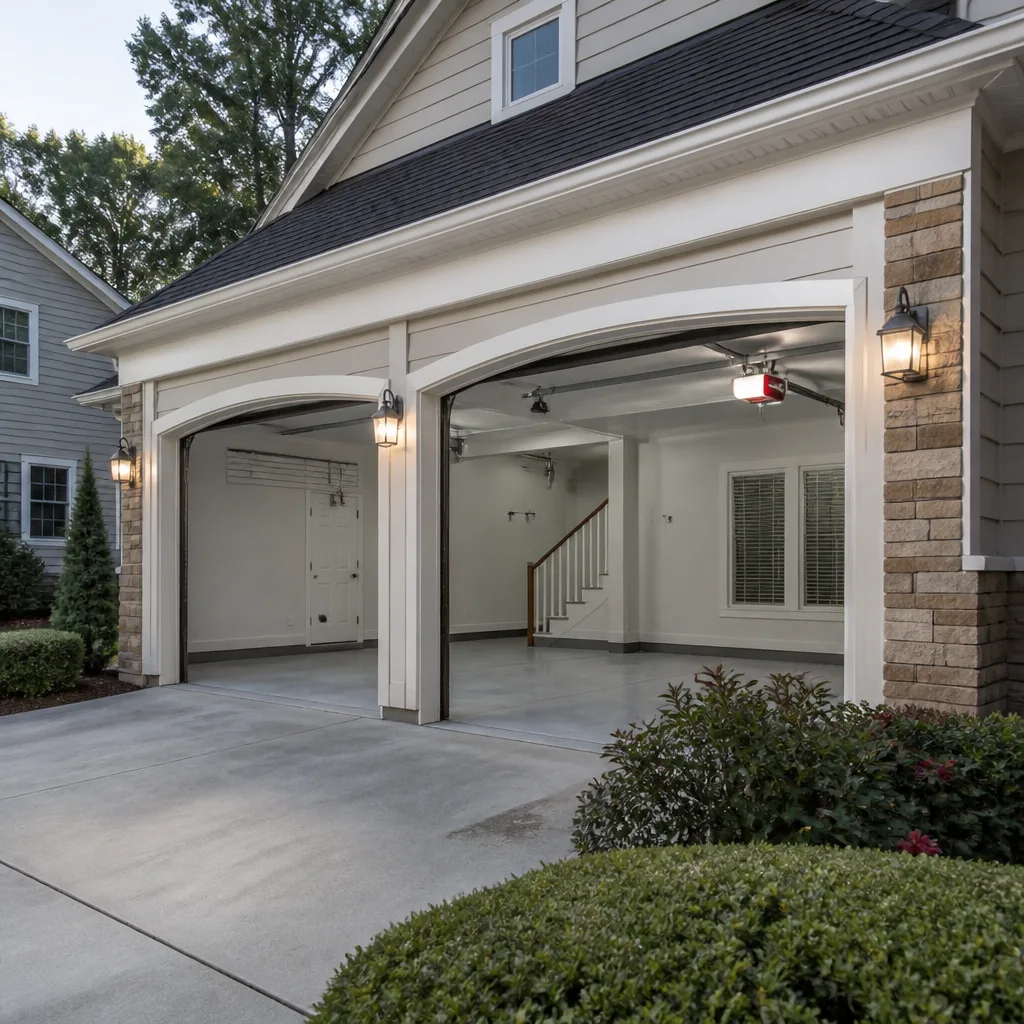 LiftMaster openers
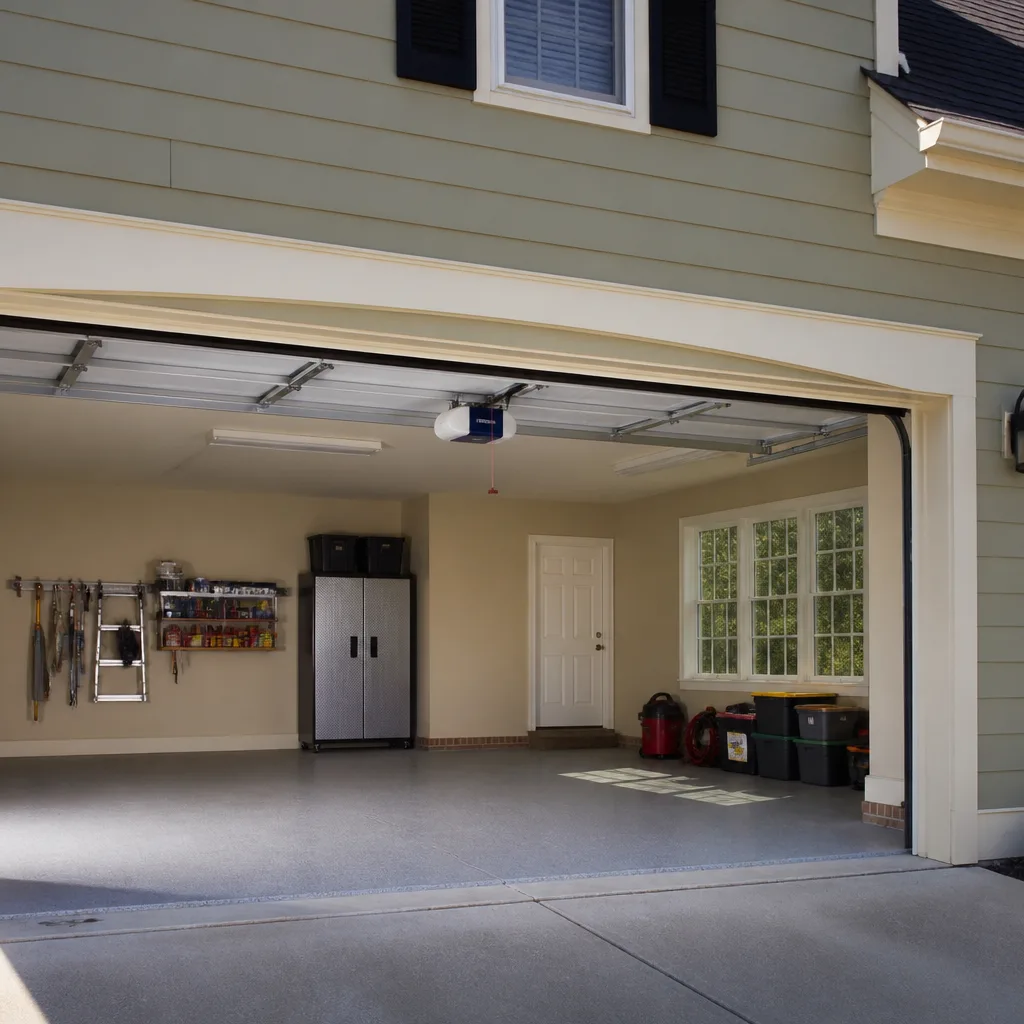 Chamberlain openers
Full 25-point door and opener safety check with every visit - springs, cables, rollers, tracks, and your LiftMaster or Chamberlain opener included
You get a price before we start. It does not change when the pro arrives.
Get your free estimateGarage Door Cost Breakdown: The Delray Beach Homeowner’s Reference for 2026
That $800 garage door replacement quote you found online was written for Ohio. In Delray Beach, the same scope of work has a floor of roughly $1,400 once you account for wind-rated door product premiums, Palm Beach County permit fees, and licensed contractor labor. Most national cost guides average numbers from markets where doors don’t have to pass a wind-load inspection and where a permit is often an afterthought. Neither is true here. What follows is a line-item cost model built for Delray Beach: what each component actually runs, why wind-rated product changes the math, how the permit fee structure works, and how to spot a low bid that leaves out the parts that matter. Use it before you get quotes, not after.
Quick Answer
A full garage door replacement in Delray Beach typically runs $1,400 to $4,500 depending on door material, size, and wind rating, with a standard single-car door landing in the $1,800 to $2,600 range. That figure includes the door, a wind-rated product appropriate for Florida Building Code compliance, removal and disposal, and the Palm Beach County permit. A spring replacement alone runs $180 to $340 for a single torsion spring; a matched pair runs roughly double, since pairs are almost always replaced together.
Styles & brands we work with
- Raised-panel steel
- Carriage house
- Modern flush
- Full-view glass
- LiftMaster openers
- Chamberlain openers
Table of Contents
- Why Delray Beach Pricing Differs From National Averages
- Component-Level Cost Breakdown
- The Palm Beach County Permit Cost Structure
- Why Wind-Rated Doors Cost More
- Cost Comparison by Door Material
- Repair or Replace? The Break-Even Question
- Opener and Hardware Costs
- Red Flags in Low Bids
Why Delray Beach Pricing Differs From National Averages
Three things push garage door work in Delray Beach above the numbers you’ll find on national home-improvement calculators. None of them are padding. Each is a real cost baked into the job.
The first is wind-rated product. Florida Building Code requires impact-rated or wind-load-rated doors in this part of Palm Beach County, which means the door you buy here isn’t the door a homeowner in Georgia buys. That premium is discussed in detail below. The second is permits. A door replacement in Palm Beach County triggers an application fee and an inspection, and the total scales with project valuation. The third is labor. Licensed Florida contractors carry insurance and overhead that unlicensed operators don’t, and their pricing reflects that. A bid that undercuts on any of these three is either using non-approved product, skipping the permit, or working without the licensing the county expects.
Delray Beach also has a housing stock split that affects pricing. The older homes east of Federal Highway, including in the neighborhoods around Swinton Avenue and the Marina District, often have narrower openings and non-standard jamb dimensions that require a custom-sized door. West of I-95, in communities like Kings Point and the developments along Atlantic Avenue, you’ll find mostly standard 16-by-7 double doors and 8-by-7 singles, which are cheaper to replace because the product comes in ready sizes. If you’re in an older home, ask the estimator to measure before quoting. A phone quote on an older Delray Beach house is a guess.
The last thing to know: pricing here is per job by estimate. No reputable company quotes a door replacement over the phone, because wind-rating specs, opening dimensions, and spring sizing all have to be checked first. A written estimate is the price, and the local pro should lay it out before any work starts. That’s the standard we hold to.
Component-Level Cost Breakdown
Here’s what a replacement actually consists of, and what each piece typically runs in the Delray Beach market. These are estimated ranges for a standard single-car door unless noted.
- Door panel (wind-rated): $900 to $2,800 depending on material and insulation. This is the largest line item by far.
- Torsion spring system: $120 to $260 for the springs themselves, sized to the door’s weight and specified in cycles.
- Opener (if replacing): $350 to $750 installed for a belt or chain drive; more for a smart-compatible unit.
- Tracks and hardware: $150 to $350 for the track set, hinges, rollers, and brackets.
- Weatherstripping: $60 to $180, including the bottom seal, side and top seals, and threshold if needed.
- Removal and disposal: $100 to $250, which covers hauling the old door and panels away.
- Labor: $400 to $900, depending on door size, whether the opening needs adjustment, and whether the opener is being replaced at the same time.
- Permit: $150 to $350, covered in the next section.
For a double-car door, add roughly 40 to 60 percent to the door panel and springs line, since the door is heavier and the spring system has to carry more load. For a taller or custom-width door, add more. These figures are estimates and the written estimate is what sets the final price – we don’t want anyone surprised at invoicing time.
One thing worth calling out: springs are the most dangerous component in your garage door system, and the cost line above reflects the hardware plus the technical competency to install it safely. Torsion springs are under extreme tension even when the door is closed. We handle that work carefully and don’t recommend anyone attempt it. If you want to understand the repair before you book it, our overview of spring repair covers what’s involved.
The Palm Beach County Permit Cost Structure
A door replacement in Palm Beach County typically requires a permit, and the total cost breaks into two parts: the application fee and the inspection fee. Both are paid to the county, not the contractor, though the contractor usually handles pulling the permit for you.
The application fee is a base charge, typically $100 to $180 depending on the scope of work. The inspection fee is assessed separately and is generally triggered when the door is installed, so the county can verify the product went in compliant and meets the wind-load requirement. The inspection fee itself usually runs $50 to $150.
Here’s the part most homeowners don’t expect: the permit total scales with project valuation. Palm Beach County assesses permits partly on the declared value of the work, which means a $2,400 door replacement carries a higher permit cost than a $1,400 one. Contractors sometimes underestimate project valuation to lower the permit fee, which creates a problem later if the inspection doesn’t pass or if the door’s value is questioned. The right approach is to declare the actual valuation and price the permit honestly in the estimate.
For a standard replacement, the permit portion typically lands between $150 and $350. That’s the number to look for in a quote. If a bid has no permit line at all, ask why. Skipping the permit means the installation isn’t inspected, which can affect insurance, resale, and whether the door is recognized as code-compliant. The Florida Building Code exists for a reason in this climate, and the inspection is how the county confirms it.
For a repair rather than a replacement, a permit usually isn’t required. Spring replacements, opener swaps, and track adjustments are maintenance work, not structural changes. A full garage door repair on an existing door rarely involves the county. If you’re replacing the whole door, plan for the permit.
Why Wind-Rated Doors Cost More
A wind-rated door in Delray Beach costs $200 to $600 more than a standard-rated product of the same material and size. That premium is not markup. Here’s what you’re actually buying.
Florida Building Code requires doors in this county to meet specific wind-load and impact standards. A standard-rated door that would be perfectly adequate in a milder climate doesn’t meet the standard here. The wind-rated version uses heavier-gauge steel or reinforced framing, thicker panels, heavier hardware, and a track and anchor system designed to keep the door in its opening under load. The springs are sized to the door’s weight, and the weight is higher because the door is stronger. The opener motor also has to be sized correctly to lift that increased weight.
The premium covers:
- Heavier-gauge steel or reinforced composite panels
- Reinforced tracks and mounting hardware
- Higher-cycle springs rated for the increased door weight
- Compliance labeling and documentation for inspection
What you’re not paying for: cosmetics. The wind-rated premium isn’t a finish upgrade or a decorative option. It’s the difference between a door the county will pass on inspection and one it won’t.
A common mistake is to accept a bid that quotes a standard-rated door at a wind-rated price, or that quotes a wind-rated door from a brand whose product isn’t compliant for this county. We install doors from Clopay, Amarr, Wayne Dalton, and Raynor; each of those lines has compliant products for this area, and the local pro should be able to show you the documentation before you sign. If a bid doesn’t specify the door’s rating and include the compliance paperwork, ask. That question separates a serious bid from a cheap one.
Cost Comparison by Door Material
Material choice drives both the up-front cost and the total cost of ownership. Here’s how the four common options compare in the Delray Beach market, with 10-year total cost of ownership estimates.
- Steel (non-insulated): $900 to $1,600 installed. Lifespan 15 to 20 years. Lowest up-front cost, but no insulation and the finish can show wear in a humid climate. 10-year TCO: $1,200 to $2,000 including minor hardware replacements.
- Steel (insulated): $1,400 to $2,400 installed. Lifespan 20 to 25 years. Better temperature control and quieter operation. 10-year TCO: $1,800 to $2,800.
- Aluminum: $1,200 to $2,200 installed. Lifespan 15 to 20 years. Lightweight and won’t rust, which suits the humidity here, but dents more easily. 10-year TCO: $1,600 to $2,600.
- Fiberglass: $1,500 to $2,600 installed. Lifespan 15 to 20 years. Doesn’t rust or dent easily, though some fiberglass products need periodic refinishing. 10-year TCO: $1,900 to $3,000.
- Wood composite: $2,400 to $4,500 installed. Lifespan 20 to 30 years with maintenance. The highest up-front cost, but visually the warmest option and often the most durable in the long run. 10-year TCO: $3,000 to $5,000 including refinishing.
The 10-year TCO figures assume normal use and annual lubrication of hinges, rollers, and springs. They don’t assume any major failures, which is realistic if the springs are specified correctly for the door’s weight. The biggest TCO variable is whether the springs are sized right. A cheap bid that uses a standard spring on a heavier wind-rated door will fail sooner, and that’s a second replacement cost inside the 10-year window.
For a Delray Beach homeowner, aluminum and insulated steel are the most common choices for the main garage door. Wood composite is usually reserved for homes where the door is highly visible from the street. If you’re unsure which fits your home, a free estimate is the easiest way to get a real recommendation. More on that under garage door installation.
Repair or Replace? The Break-Even Question
Replacement usually makes sense when the door is at or near end of lifespan, when the frame or panels are visibly damaged, or when multiple components are failing at once. Repair usually makes sense when a single component is down and the rest of the system is sound.
The break-even math is straightforward. If the door is 15 years old or more and a repair quote exceeds 40 to 50 percent of a replacement, replacement is usually the better long-term choice. If the door is under 10 years old and the issue is a single spring, opener, or track, repair is almost always the right call.
Three scenarios come up again and again in Delray Beach:
- A broken torsion spring on a newer door (under 10 years): repair. A $180 to $340 spring replacement restores the door, and the rest of the system is still sound.
- A broken spring on an older door (15+ years) with worn rollers and a fading finish: this is the break-even point. Replacement avoids a second repair in a year or two, and the wind-rated premium on the new door is an upgrade you wouldn’t get from patching the old one.
- A failing opener on an otherwise sound door: repair or replace the opener, not the door. The door is fine; the motor is the issue.
One honest note: the door’s actual condition matters more than any rule of thumb. A local pro should be able to assess whether the panels are sound, the tracks are straight, and the springs are sized correctly, then tell you which path makes sense. It’s a conversation, not a sales pitch.
Opener and Hardware Costs
Replacing an opener alongside a new door is common, since the new door’s weight may exceed what an older opener can lift. Here’s what opener work runs, and what to expect when you combine it with the door installation.
A basic chain-drive opener runs $350 to $500 installed. A belt-drive opener runs $450 to $650 installed, and is quieter, which matters if the garage is under a bedroom. A smart-compatible opener with app control runs $550 to $800 installed. We work on LiftMaster and Chamberlain units regularly, including their smart-home integrations, plus legacy brands like Genie and Craftsman. Your opener, your brand – we work on the one you have.
Three things to verify when adding an opener to a replacement:
- Lift capacity. The opener motor has to handle the new door’s weight, and a wind-rated door is heavier than a standard one. Mismatched lift capacity is a common source of premature opener failure.
- Drive type. Belt drive for quieter spaces, chain drive for the most durable option, screw drive for older installations. Each has tradeoffs in noise and maintenance.
- Smart-home compatibility. If you’re replacing the opener anyway, this is the moment to get one that works with your home system. Ask the pro to confirm the unit pairs with your setup before installing.
If you only need the opener replaced and the door is fine, our garage door opener repair page covers diagnostics and what a repair typically costs versus a replacement. A motor that won’t lift a door is sometimes just a failed capacitor or a stripped gear, and that’s a repair, not a replacement. A local pro should be able to tell you which within minutes of looking at it.
Red Flags in Low Bids
A bid that undercuts every other quote by a wide margin isn’t a bargain. It’s a bid that left something out. In Delray Beach, there are three specific things cheap bids cut.
- Non-approved product. A standard-rated door quoted at a wind-rated price, or a wind-rated door from a brand whose product doesn’t carry the compliance documentation for Palm Beach County. The inspection will catch it, but by then you’ve paid for the door.
- Skipped permit. No permit line in the quote is the giveaway. A replacement without a permit isn’t inspected, which means the door’s code compliance is unverified.
- Under-spec’d springs. A standard spring quoted on a heavier wind-rated door will fail sooner than a cycle-rated spring sized to the door’s weight. The cheap bid saves $80 to $150 up front and costs you a full spring replacement inside a few years.
- Vague compliance paperwork. A bid that doesn’t name the door’s rating and model number is a bid that hasn’t committed to a compliant product.
- No written estimate. A verbal or texted number with no itemized breakdown isn’t a price. It’s a starting point the contractor can renegotiate when they get to the door.
If you have more than one bid in hand, the easiest way to compare them is line by line. Door product and rating, springs, opener if any, hardware, permit, labor, disposal. A bid that’s missing any line is asking you to fill in the gap later. A written estimate that itemizes each line, and that the local pro commits to before work starts, is the honest way to price a job. That’s the standard we hold our Delray Beach work to.
Common Mistakes to Avoid
- Quoting over the phone and committing. In Delray Beach, wind-rating specs, opening dimensions, and spring sizing all have to be checked before a door can be priced accurately. A phone quote is a guess, and the guess is almost always low.
- Buying against a national cost guide. The numbers on the big national calculators were written for markets without wind-load requirements or permit-driven pricing. Anchor to the figures in this guide, then compare real quotes against them.
- Choosing the lowest bid without reading the line items. A bid that’s $600 cheaper than every other quote is $600 cheaper because it’s missing the permit, the wind-rated product, or the correctly sized springs. Compare lines, not totals.
- Skipping the permit to “save time.” Replacement without a permit means the door isn’t inspected, which can affect insurance and resale, and it leaves the code compliance unverified. Palm Beach County’s permit process exists for real reasons in this climate.
- Replacing the door without checking the opener. A new wind-rated door is heavier than the old one, and an old opener may not be rated to lift it. Plan to have the opener assessed at the same time.
- Assuming coastal homes need special hardware and inland homes don’t. The wind-load requirement applies county-wide. Whether you’re near the Marina District or out near Kings Point, the door has to be compliant.
- Waiting until the springs break to think about cost. Springs are one of the cheapest repairs on a garage door and one of the most avoidable failures. A spring that’s near the end of its cycle count can be replaced on a planned basis before it strands the door open.
See the difference
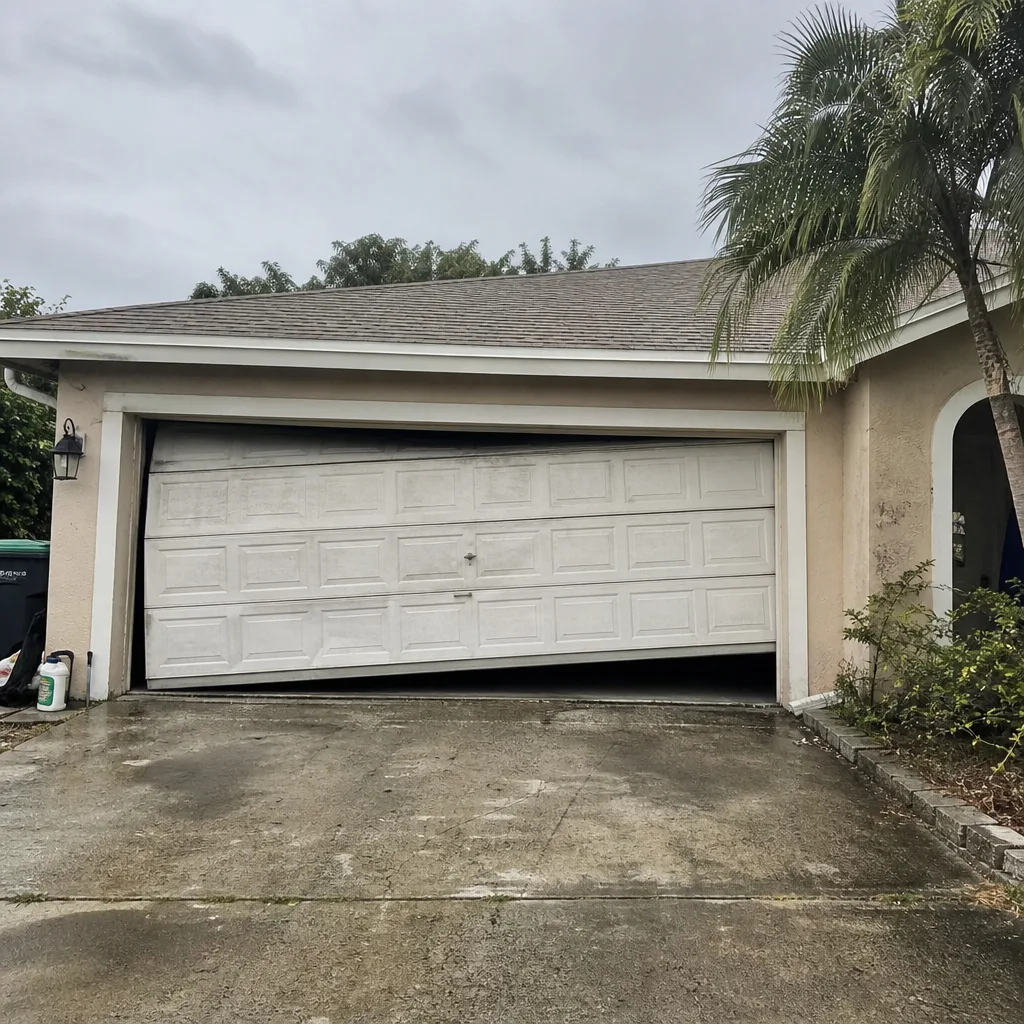 Before
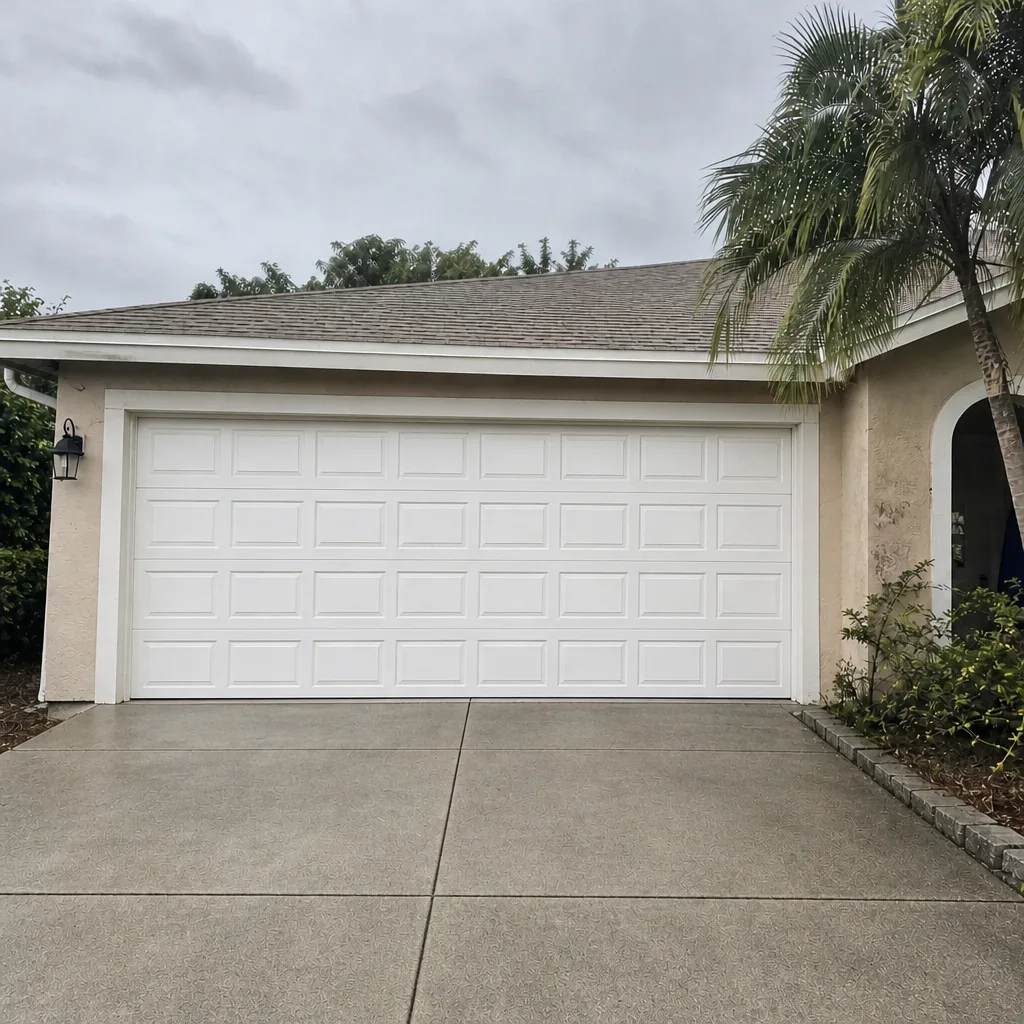 After
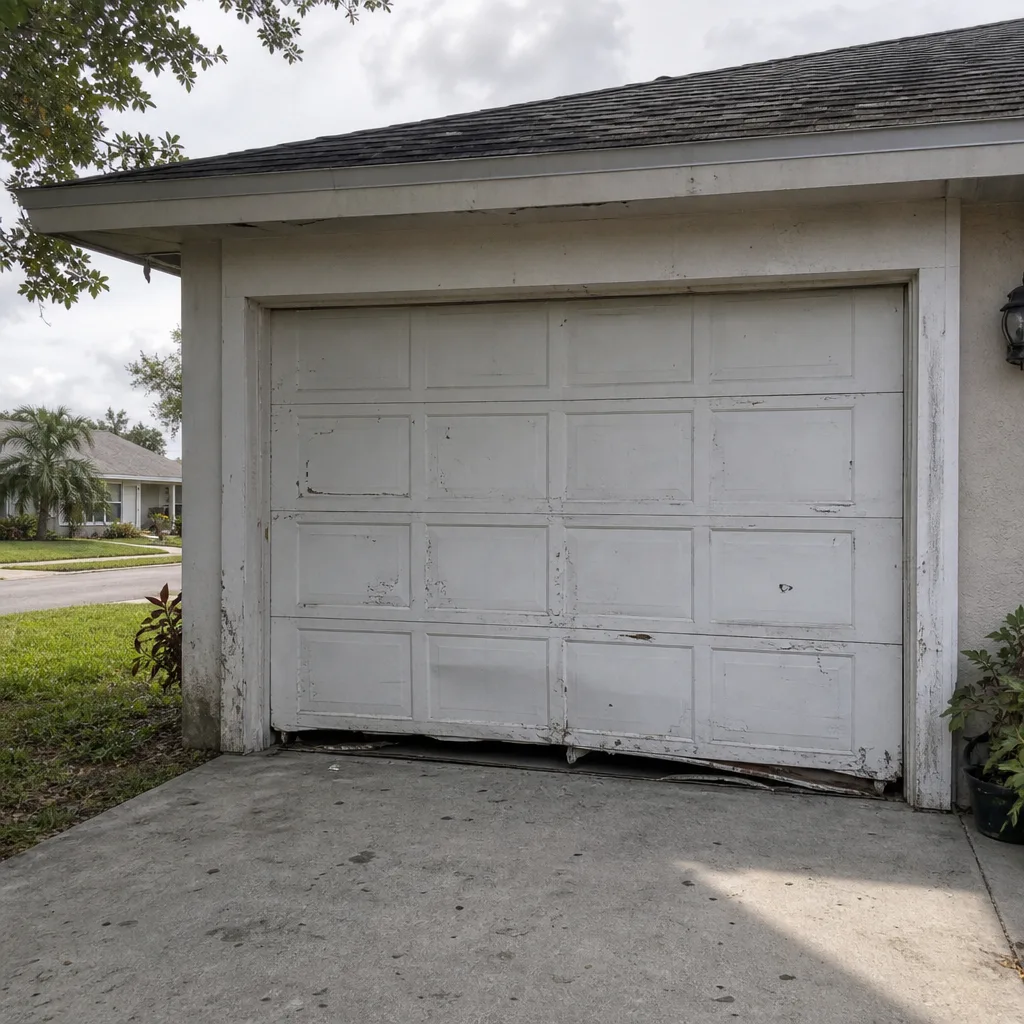 Before
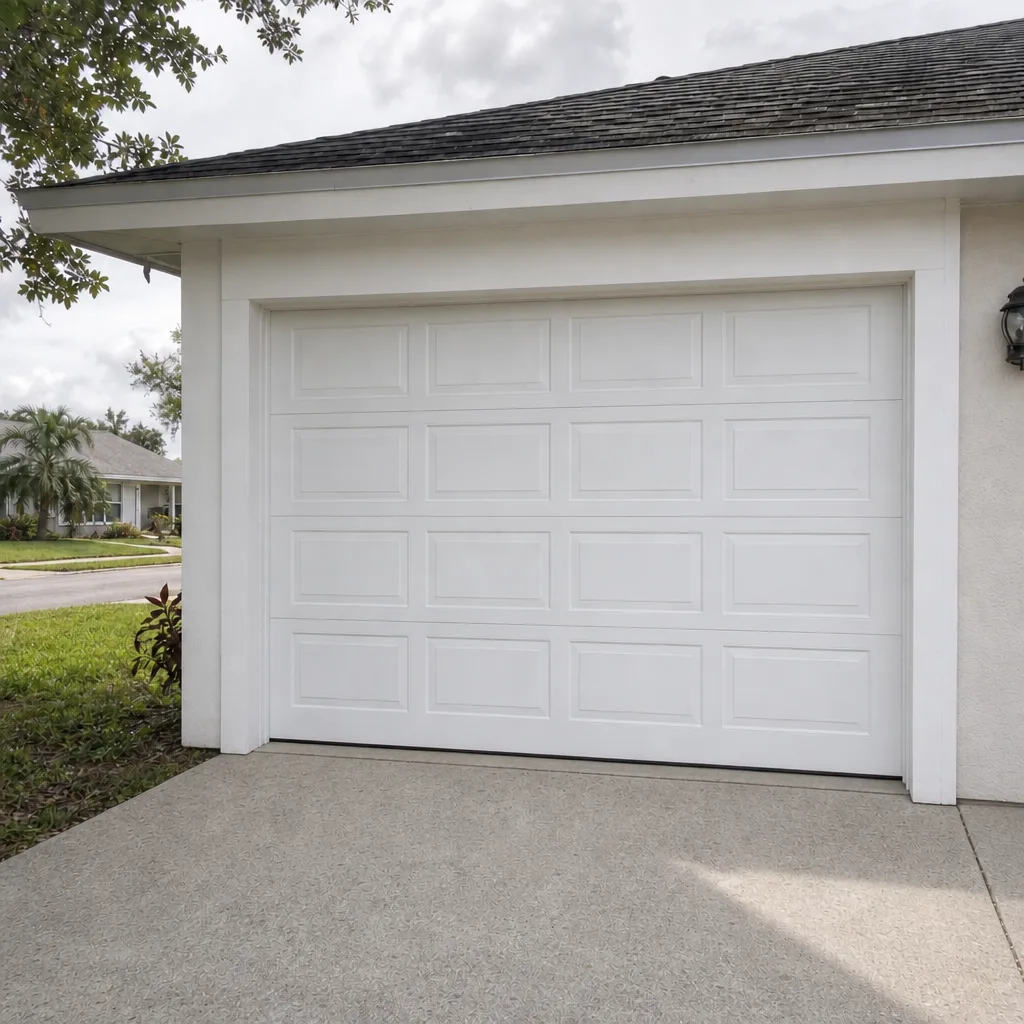 After
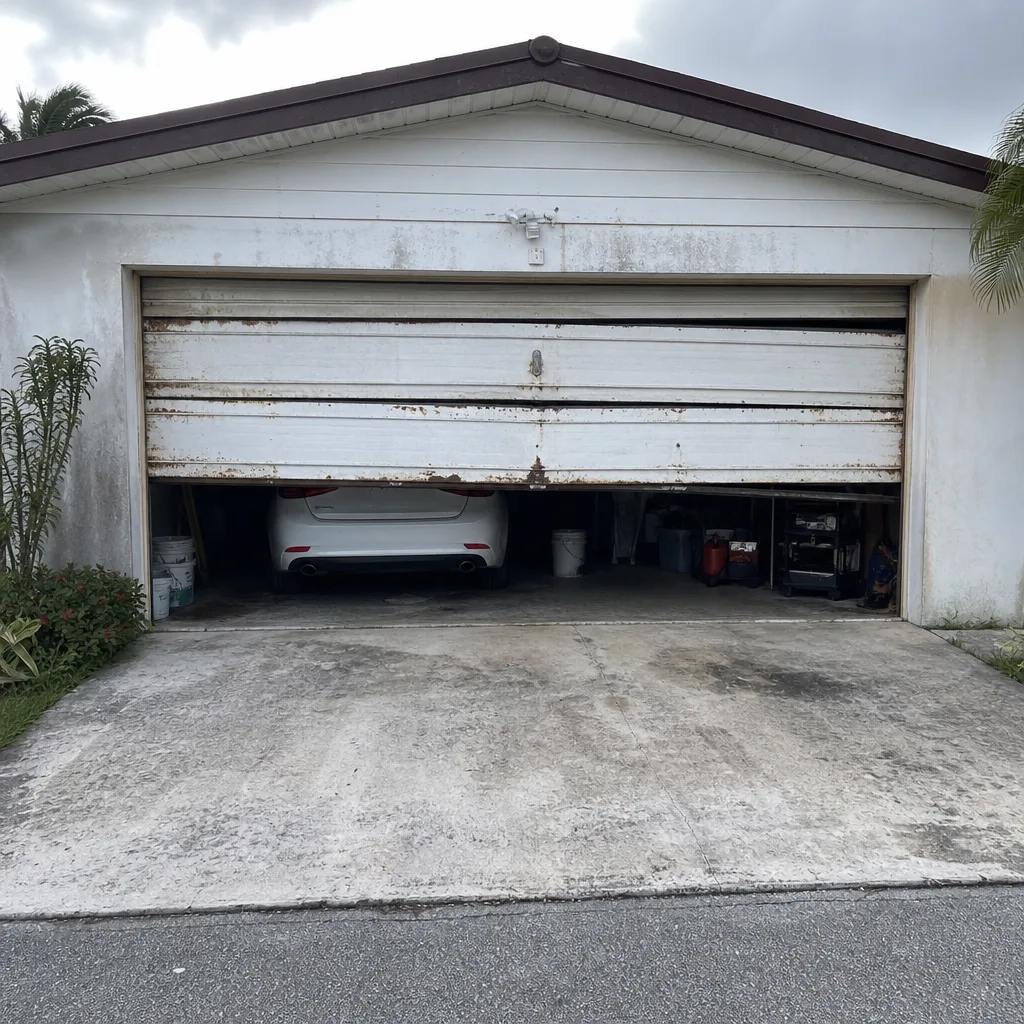 Before
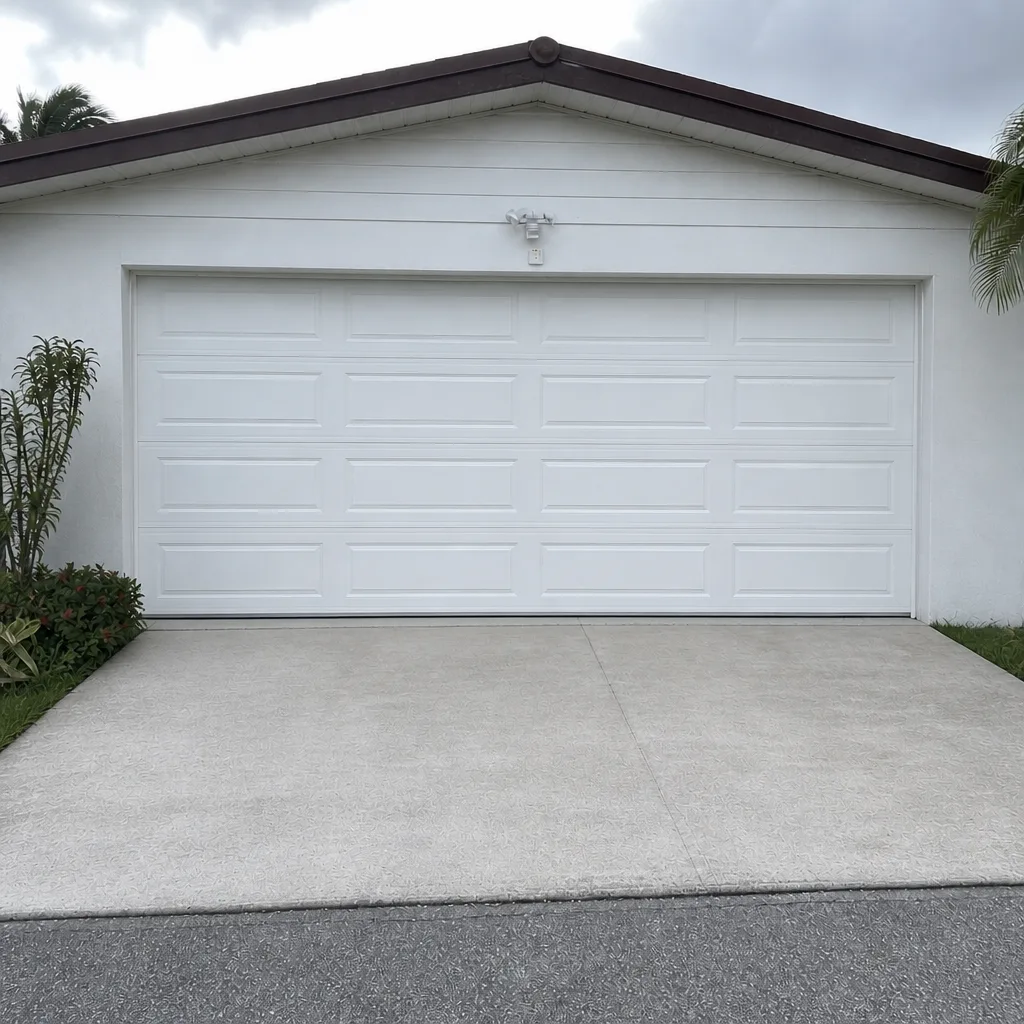 After
When to Call a Professional
A broken torsion spring, a door that’s come off its track, a bent track, a panel that’s separated from its hinges, or an opener that won’t lift the door is a job for a trained technician. Springs and cables are under high tension and can cause serious injury if handled by someone without the right tools and training. Garage doors are heavy, and the hardware that holds them is not a place to experiment. Call before attempting anything on the spring or cable system. For anything else, the same applies: if the door isn’t lifting smoothly or is making new noises, it’s worth having a technician look at it before a small issue becomes a bigger one. Delray Beach Garage Door Repair Pros offers free estimates in Delray Beach – call (855) 393-4914 to schedule one, or to talk through what’s happening with your door.
Frequently Asked Questions
A full garage door replacement in Delray Beach typically costs $1,400 to $4,500 depending on material, size, and wind rating, with a standard single-car door usually landing in the $1,800 to $2,600 range. That includes the door, the wind-rated product, removal and disposal, and the Palm Beach County permit. Call (855) 393-4914 for an exact quote – estimates are free.
Florida Building Code requires wind-rated doors in Palm Beach County, and that product costs $200 to $600 more than a standard-rated door of the same material and size. Add Palm Beach County permit fees and the overhead of licensed Florida contractor labor, and the Delray Beach floor lands around $1,400 versus roughly $800 for a national average. Call (855) 393-4914 to get a real quote for your door.
Yes, a door replacement in Palm Beach County typically requires a permit with an application fee and an inspection. The permit cost usually runs $150 to $350 and scales with project valuation, and the inspection verifies the door’s wind-load compliance. Call (855) 393-4914 and we can walk you through what your specific job needs.
A single torsion spring replacement in Delray Beach typically costs $180 to $340. If the springs are a matched pair, the pair costs roughly double that, since pairs are almost always replaced together to keep the door balanced. Call (855) 393-4914 for an exact quote – estimates are free.
Repair is usually cheaper when the door is under 10 years old and a single component has failed, and replacement usually makes more sense when the door is 15 or more years old and a repair would exceed 40 to 50 percent of a replacement. The specific condition of the door decides it. Call (855) 393-4914 and a technician can talk you through which path fits your door.
No – the written estimate is the price, and the local pro should agree to it before any work starts. If the scope changes once the door is inspected, the change should be discussed and agreed before it’s done, not invoiced after. Call (855) 393-4914 for an estimate in Delray Beach – estimates are free.
The Bottom Line
Garage door pricing in Delray Beach carries a real premium over national averages, and that premium is made of three legitimate costs: wind-rated product required by Florida Building Code, Palm Beach County permit fees, and licensed contractor labor. The floor for a replacement is around $1,400, and a standard single-car door usually lands between $1,800 and $2,600. Springs stand alone at $180 to $340 per spring, pairs at roughly double. When you get quotes, compare line items, not totals: door product and rating, springs, opener, hardware, permit, labor, disposal. A bid that skips any line is a bid to renegotiate later. A written estimate agreed before work starts is the honest way to do it. That’s how we price work in Delray Beach, and it’s the standard to hold every bid to. When you’re ready for a real number on your door, our Delray Beach Garage Door Repair Pros team is one call away.
For a free estimate on repair, replacement, or an opener, call (855) 393-4914. We’ll measure the opening, check the wind-rating requirement for your door, and put a written price in front of you before any work starts – so you can compare real numbers instead of chasing a quote that was written for another state.
Written by the team at Delray Beach Garage Door Repair Pros.