Last updated November 21, 2026
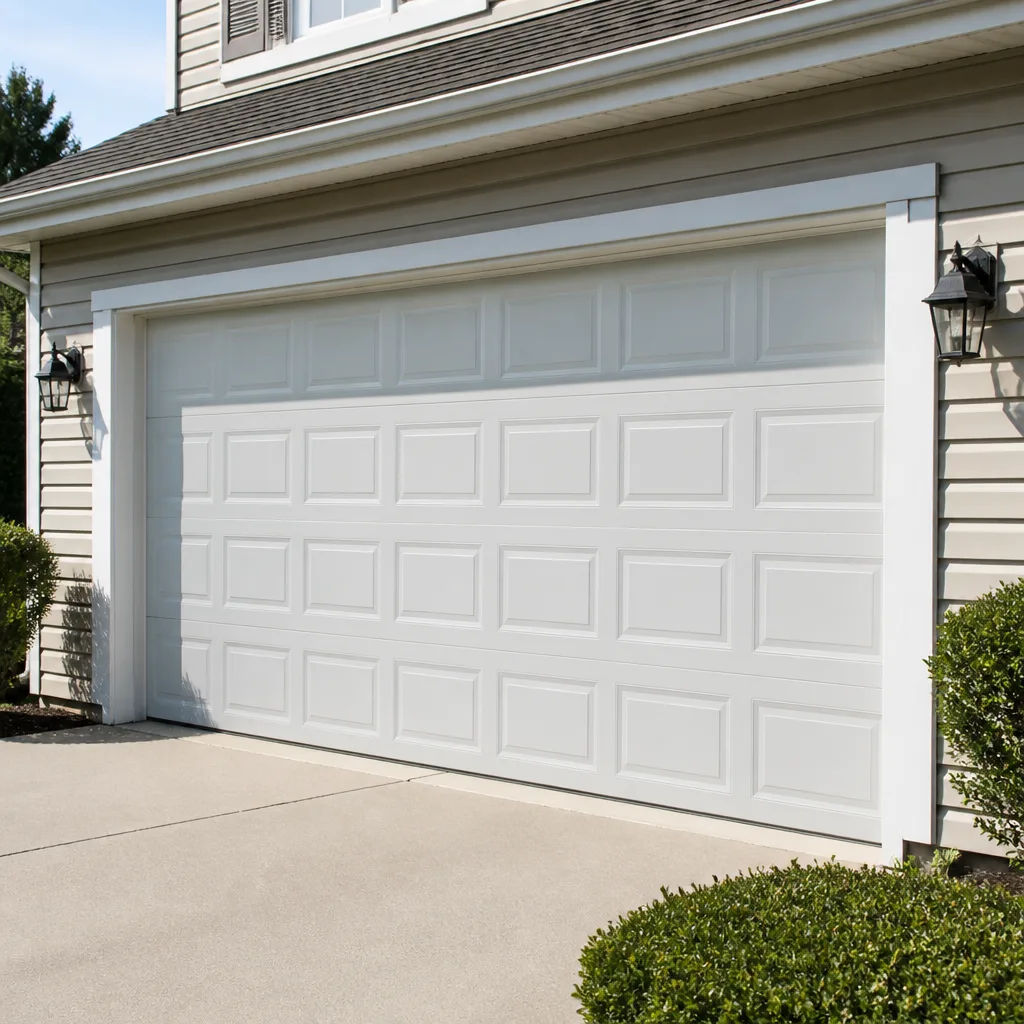 Raised-panel steel
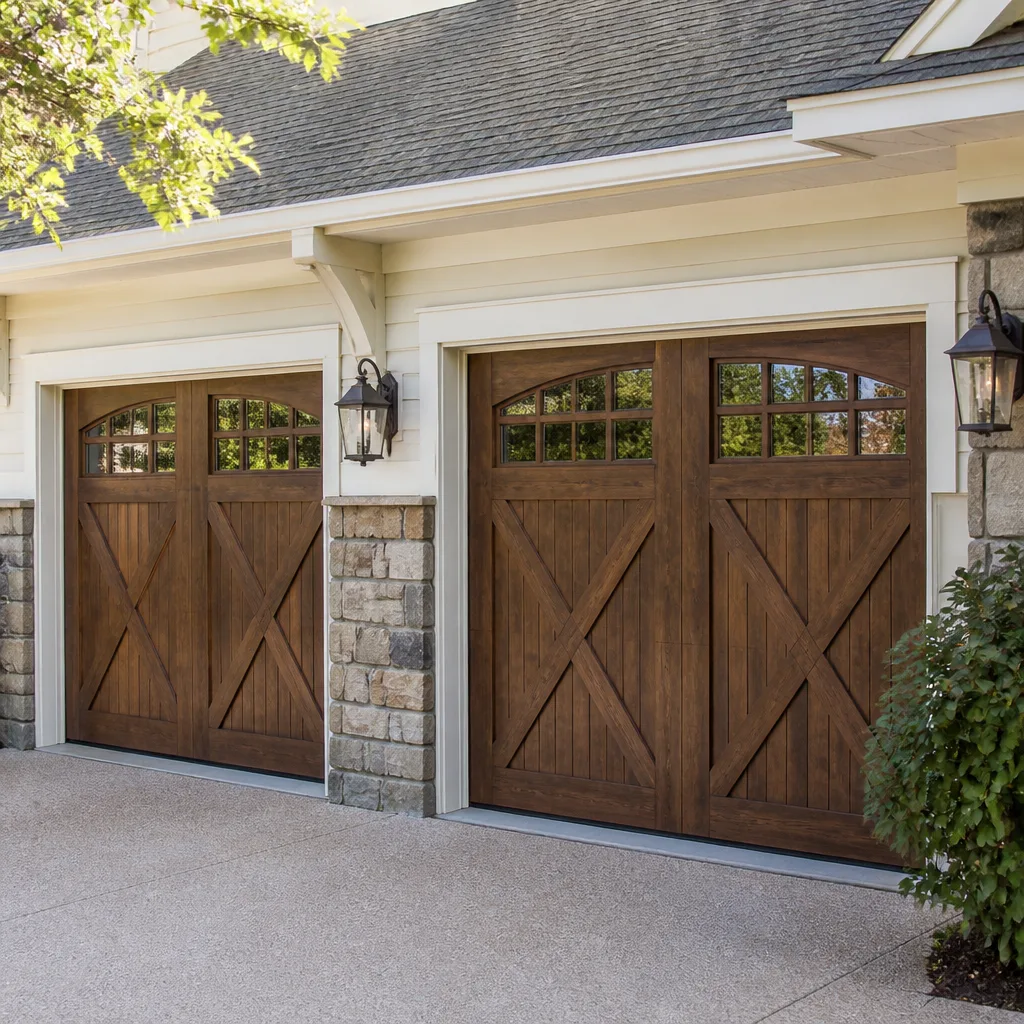 Carriage house
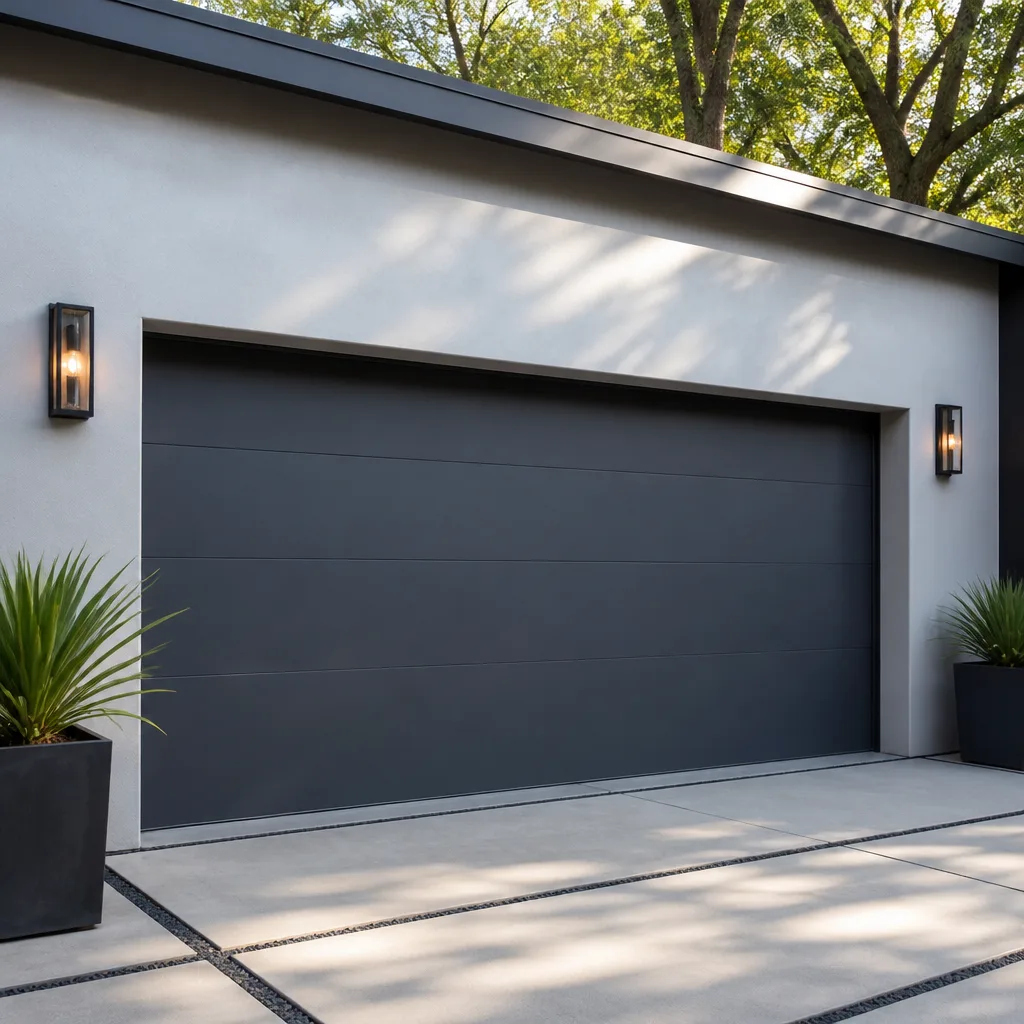 Modern flush
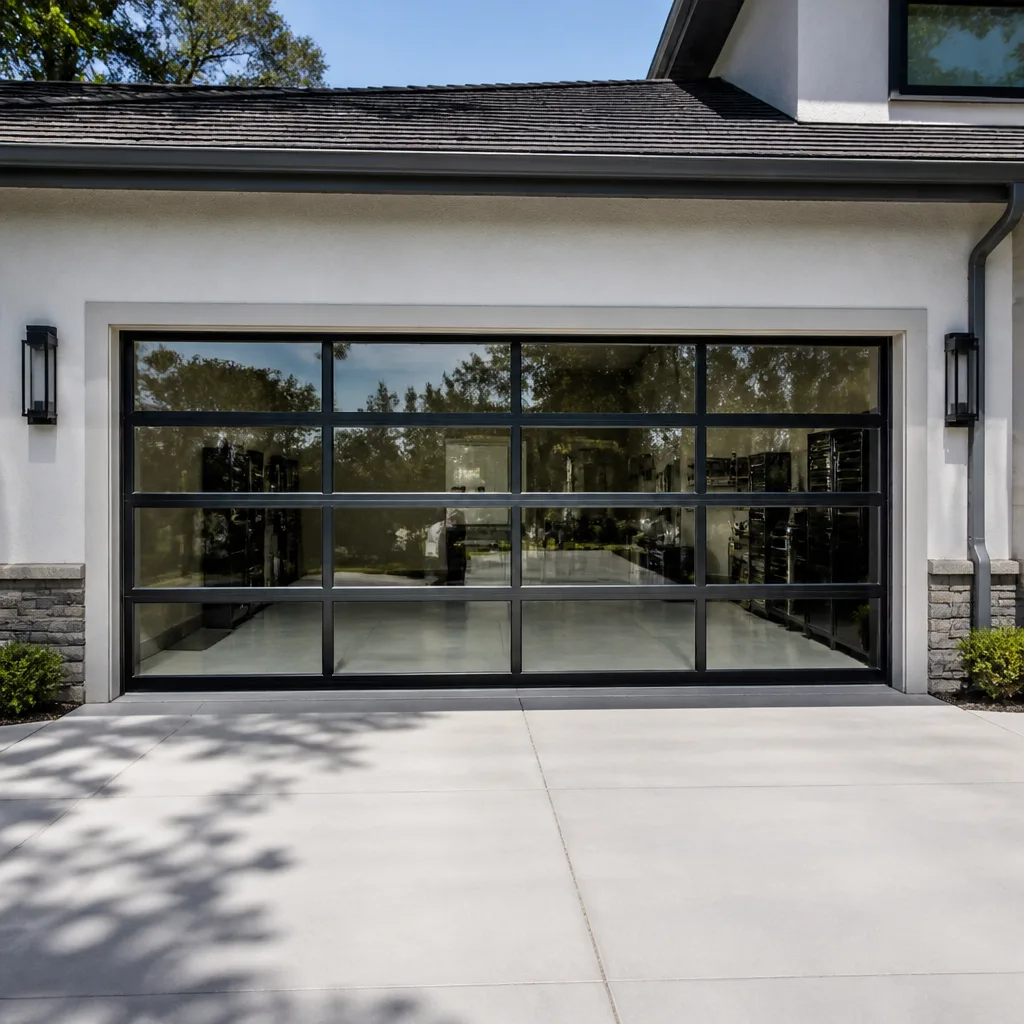 Full-view glass
 LiftMaster openers
 Chamberlain openers
Full 25-point door and opener safety check with every visit - springs, cables, rollers, tracks, and your LiftMaster or Chamberlain opener included
You get a price before we start. It does not change when the pro arrives.
Get your free estimateGarage Door Warning Signs: A Delray Beach Homeowner’s Reference Guide
The grinding noise your door started making three weeks ago isn’t the problem. It’s the symptom. By the time a door stops opening, something underneath has usually been complaining for a month or more: a dry bearing chewing its race, a cable rusting under tension, a hinge loosening panel by panel. Delray Beach humidity speeds up every one of those processes, and it does it quietly. This guide maps the warning signs to the components that cause them, so you can tell the difference between a scheduled repair and a door you shouldn’t touch until a technician gets there.
Quick Answer
In Delray Beach, the warning signs that matter most are a grinding or popping cycle, a door that reverses on its own, visible rust striping on the cables, white powdery deposits around the hinges, and an opener that suddenly runs slower than it used to. Most of these point to a specific component failing and give you weeks, not days, to book a non-emergency repair. A loud bang from above the door with a dead door below it is different: that’s a broken spring, and the door should stay shut until it’s repaired.
Styles & brands we work with
- Raised-panel steel
- Carriage house
- Modern flush
- Full-view glass
- LiftMaster openers
- Chamberlain openers
Table of Contents
- Symptom-to-Cause Diagnostic Table
- What Each Noise Is Telling You
- Visual Signs That Matter in Delray Beach’s Humidity
- Opener Behavior Warnings Homeowners Overlook
- Scheduled Repair vs. Stop Using the Door Now
- The Weatherstripping Warning Nobody Talks About
- A 15-Minute Seasonal Check for Delray Beach Homes
- Common Mistakes to Avoid
- When to Call a Professional
- Frequently Asked Questions
Symptom-to-Cause Diagnostic Table
Most garage door failures announce themselves in a predictable order: noise first, then visible wear, then a door that behaves strangely. If you can match what you’re hearing and seeing to a likely cause, you’re already ahead of the homeowner who waits for total failure. Here’s the mapping we use on service calls across Delray Beach.
| Symptom | Likely Cause | Typical Urgency |
|---|---|---|
| Grinding through the whole cycle | Dry or failing roller bearings | Scheduled repair |
| Sharp popping from above the door | Torsion spring or cable under load | Stop using the door |
| High-pitched squealing | Metal-on-metal at rollers or hinges | Scheduled, soon |
| Rattling that worsens over weeks | Loose hinges or track brackets | Scheduled repair |
| Door reverses on its own | Track misalignment or a safety sensor fault | Investigate before daily use |
| Opener runs slower than it used to | Losing spring tension | Scheduled repair |
| Rust striping on a cable | Cable wear, early salt-related corrosion | Inspect promptly |
| White deposits on hinges and bolts | Electrolytic corrosion of the zinc plating | Scheduled service |
A word about the salt issue, because it’s the single biggest confounder in Delray Beach. HVAC systems, road dust, and simple humidity all look similar on paper. But white deposits that crust around hinges and rust that appears on bare bolt threads point at the same process: the protective zinc coating oxidizing faster than it should, usually because the hardware is being exposed to moisture and salt continuously. Once the coating goes, the underlying steel follows.
The point of the table isn’t to hand you a diagnosis. It’s to help you describe what’s happening accurately when you call a repair company, and to help you judge whether you can keep running the door for a few weeks while you book garage door repair. Half our diagnostic time on a Delray Beach service call is spent confirming which component is actually the source – grinding at the top of the cycle points at one part, grinding at the bottom at another.
What Each Noise Is Telling You
Garage doors don’t make random noises. Every sound comes from metal moving against metal, springs under tension, or bearings rotating on a shaft. If you can name the noise, you’ve narrowed the cause to a handful of components. What matters is whether the noise is new, whether it repeats every cycle, and where on the door it comes from.
Grinding
Grinding is almost always bearing-related. The rollers in your door’s hinges contain small bearings pressed into the metal, and once the lubrication in those bearings dries out, the roller skates against the track instead of rolling through it. In Delray Beach’s year-round warmth, grease thins faster than in colder climates, and bearing failure arrives sooner. A dry bearing catches and releases hundreds of times a day as the door cycles, each catch sending a small shock up the shaft.
Popping
Popping is a different animal. A sharp pop from above the door on opening, followed by the door stopping or losing the ability to open at all, usually means a torsion spring has failed or a cable has jumped a drum. Treat that as a hard stop: no more door cycles until a technician inspects it.
Squealing
High-pitched squealing usually traces to two pieces of metal rubbing: a hinge with a dry pivot, or a roller riding the edge of its track. It’s the most benign of the warning noises, but it signals that wear is accelerating, and wear left alone becomes a bigger repair.
Rattling
Rattling has two common sources. Loose hinge screws, and track brackets that have worked free. If the rattle seems to come from above the door, the operator bracket or the springs are candidates. Get it looked at – a rattle today is a track separation next month.
Bang, then silence
A single loud bang from above the door, followed by the door refusing to open or closing under its own weight, is the signature of a broken torsion spring. There is no warning beyond a door that suddenly feels heavier than it was before. If you or anyone in your household hears a bang and then finds the door unresponsive, keep it closed and call for emergency service. This is one of the most common emergency calls we receive in Delray Beach, and the fix – a same-day spring replacement – usually has the door running again the same visit.
A noise that gets worse
Here’s the pattern most homeowners miss: a noise that starts subtle and gets louder over a few weeks is almost always a slow-failing component. A noise that starts loud and stays consistent could simply be a dry point that needs lubrication. Watch the trend, not just the volume.
Visual Signs That Matter in Delray Beach’s Humidity
You can learn a lot about a garage door by looking at it with a flashlight from inside the garage, not from the driveway. The inside is where the springs, cables, hinges, and brackets live, and it’s where early failures show their first visible signs. Here’s what to look for.
White mineral deposits on hardware
Powdery white crust forming on hinges, bolts, track connectors, and the spring drum isn’t cosmetic. It’s the zinc plating breaking down – a process accelerated in South Florida’s warm, humid air, which traps moisture against metal parts for far longer than drier climates do. Once you see the crust, the underlying steel is somewhere in the early stage of the same process. It’s not an emergency, but it’s the signal that a seasonal inspection is overdue.
Rust striping on cables
Garage door cables are steel, wrapped around a drum, and under constant tension. A cable that’s beginning to fail often shows rust in a striped pattern along its length, or hair-thin fraying at the ends where the loop meets the drum or the bracket. Rust striping appears before the cable actually breaks – sometimes months before. If you see either striping or fraying, treat it as a warning to book a repair soon, not someday.
Rust around panel edges
Rust that appears along the bottom edge of the door panels, or along seams where panels meet, is worth paying attention to. It signals that moisture is sitting behind the weatherstripping or the panel joints, and it weakens the panel itself. On a Clopay or Amarr steel door, edge rust that has progressed to bubbling paint often means the panel won’t be reparable with paint alone. Inspect the bottom panel from inside and outside once a season.
Track discoloration and misalignment
Tracks should read as cleanly parallel to each other from one side of the garage to the other. If you spot bend or separation at a bracket, or if the vertical and horizontal sections don’t line up cleanly at the curve, the door’s alignment is already off. Thermal expansion in a Florida garage is real: on hot afternoons your door’s metal edges shift a fraction, and if the track is loose, those fractions add up.
Worn hinge plates
Hinges work hard. Each opening cycle pivots them, and their pivot pins wear. If a hinge looks dramatically looser or darker than the one next to it, or its pin has worked visibly off-center, the hinge is close to failing. Replacement is simple and inexpensive when it’s caught early.
Once you’ve completed a visual check, the next useful step is a functional test: cycle the door and watch it from start to finish. If the door visually tracks the same on the way up and on the way down, most of your mechanicals are healthy. If it catches, hesitates, or swings toward one side, that’s your clue to book garage door repair before the problem gets expensive.
Opener Behavior Warnings Homeowners Overlook
Owners of LiftMaster and Chamberlain openers, and of older Craftsmans and Genies, tend to blame the opener first when a door misbehaves. In our experience, the opener is often the messenger, not the cause. Three behaviors are worth understanding.
Slow travel speed
A door that seems to travel more slowly than it used to, or that stutters briefly on the way up, is often indicating that its torsion spring is losing tension. As tension drops, the spring stops doing its share of the lift, and the opener has to add more force. Modern openers are designed to sense that extra resistance and compensate – briefly. Given time, they either time out or strain against their own limits. A technician can check the spring tension and the opener’s force settings together to determine which is the actual culprit.
Repeated reversals
A door that reverses on closing, sometimes with no visible obstruction, has one of three problems: misaligned safety sensors, a track that’s out of alignment, or a logic board that’s reading obstruction where there isn’t one. In Delray Beach, loosened tracks from seasonal thermal expansion are a frequent explanation. Track service is straightforward and generally inexpensive; ignoring it for months can strain the opener motor past the point of easy repair.
Wall button lag
Press the wall button and count the delay before the door moves. A brief half-second is normal. A noticeable lag that’s grown over time suggests an opener logic board operating under heat stress – not uncommon in Florida garages, where summertime temperatures inside a closed garage routinely climb higher than the outside air. If a LiftMaster or Chamberlain unit starts responding slowly or inconsistently, that’s worth diagnosing, not replacing on impulse. A technician can confirm the logic board is the issue before you spend money on a full opener replacement.
Opener won’t respond at all
The basics first: opener units from LiftMaster, Chamberlain, Genie, and Craftsman all have safety lockout features that can put the unit into a no-response state. The wall button, the remote, and the safety sensors all need to be checked and cleared in order. If a Genie or Craftsman opener is dead to both the wall button and the remotes, that’s a real service call – but it’s often a logic board or capacitor issue, not always a replacement. That’s what garage door opener repair involves in most homes we visit: diagnosing the cause before recommending a new unit.
Scheduled Repair vs. Stop Using the Door Now
The most important judgment you’ll make as a homeowner is telling the difference between a warning sign you can schedule and a warning sign you shouldn’t ignore. That distinction is easy to get wrong, and getting it wrong can turn a $200 repair into a $600 one – or worse, cause an injury. Here’s the split, in the practical terms we use with our own customers.
Stop using the door immediately if you see any of these
- A loud bang from above the door followed by a dead door. That’s a broken torsion spring. The door is now bearing its full weight on the cables and opener. Do not attempt to open it.
- A visibly frayed or twisted cable. Cables under spring tension are one of the most dangerous components in the door system. Fraying means failure is imminent.
- A door that lurches to one side, or a visibly separated track. A door that swings off-track can bind against the opener and pull the whole mechanism loose.
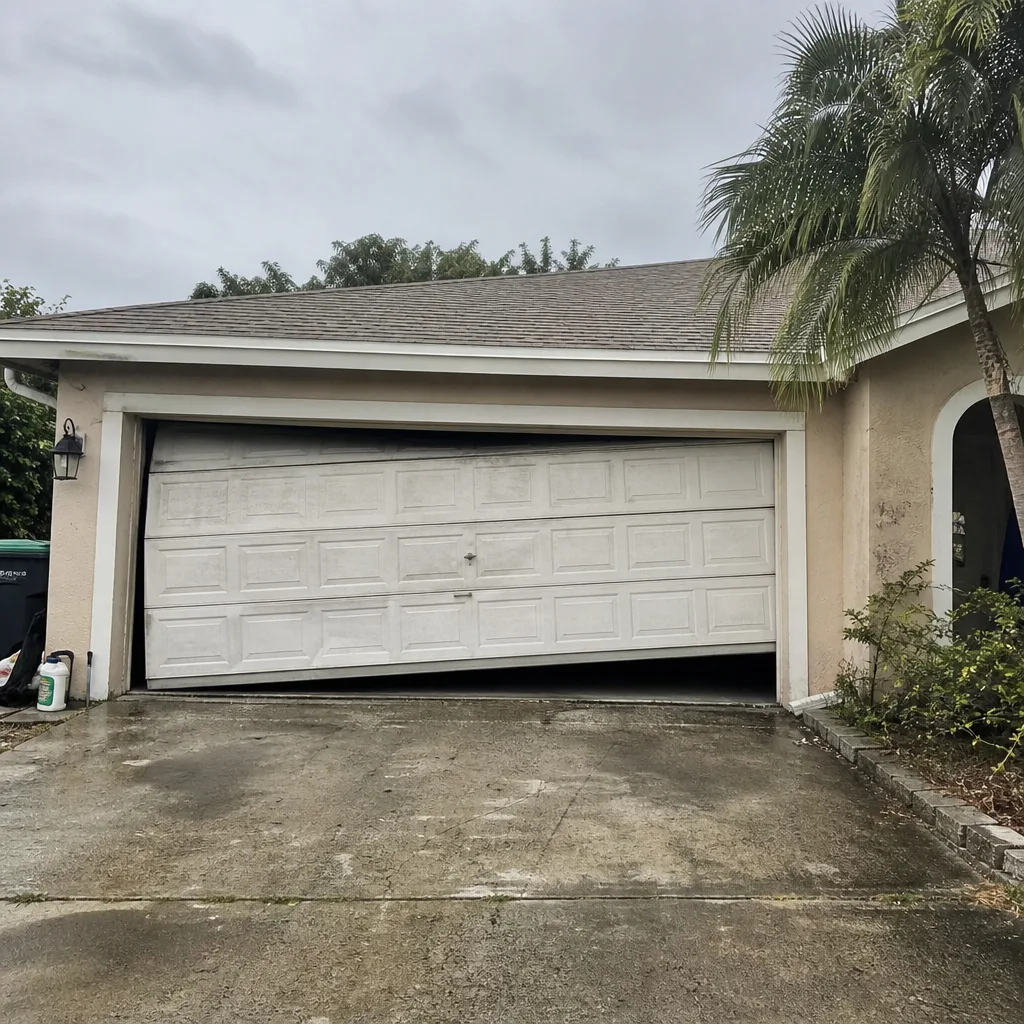
- The door hanging visibly unevenly with the bottom panel tilted. Whether the cause is a broken spring or a snapped cable, don’t cycle the door again until a technician inspects it.
- Opener motor making noise but no door movement. The drive system has failed. Don’t continue forcing the motor.
Where a scheduled repair is almost always fine
- Grinding that’s consistent, but the door still opens reliably.
- White surface deposits on hinges and bolts, no functional change.
- A slow-but-working opener (Lag a second or two, door still cycles).
- Squealing or rattling without any change in door travel.
- Rust on panel edges or cosmetic orange discoloration on the bottom panel.
Do not attempt any of these repairs yourself. Torsion and extension springs store enormous energy, cables are under spring tension, and both are the leading cause of serious garage door injuries. This is the work a trained technician does with proper tools and with proper respect for the loads involved. In Delray Beach, a broken spring under a car that’s been wedged in the garage isn’t uncommon; that’s a same-day emergency call, not a Saturday project.
The Weatherstripping Warning Nobody Talks About
The bottom seal on your garage door is the least visible, most ignored component on the entire system, and in Delray Beach, it’s also the one that fails fastest. Here’s the pattern. The rubber weatherstripping on your door’s bottom edge and around the frame looks fine in the first year or two. By year three or four, it starts to show a pale haze on its surface – a whitish, slightly powdery texture that looks like dust but doesn’t wipe off cleanly. That haze is UV degradation. The rubber is losing elasticity, and the sun has chemically altered the surface. It looks cosmetic. It isn’t.
Brittle rubber cracks. Cracked rubber lets water and insects into the space between the door and the frame. That water sits against the door’s bottom panel, and now that edge begins to rust. Once the bottom panel of a steel door like a Clopay or Wayne Dalton rusts at the frame joint, the repair often requires panel replacement rather than a quick repaint. The original problem was $40 of weatherstripping.
What to look for on inspection:
- Whitish haze or film on the seal’s surface that doesn’t rub away.
- Hardness – the seal should feel pliable; if it feels like a plastic ruler, it’s already compromised.
- Cracking or splitting visible when you lift the seal and check the back of it.
- Gaps of light – close the door from inside the garage in the daytime and look for any daylight coming through the bottom edge.
- Water marks on the garage floor along the base of the door after rain.
In a Florida house where the garage is your main entry point, that seal gets cycled dozens of times a day. The sun exposure is real, and the humidity doesn’t help. A five-minute inspection once a season is the difference between replacing weatherstripping and replacing the bottom panel – not to mention the water you’d otherwise find in the garage after a Florida downpour.
A 15-Minute Seasonal Check for Delray Beach Homes
You don’t need a technician’s tools to spot the warning signs in this guide. You need a flashlight, a few minutes, and a routine that you actually come back to. Here’s a numbered walkthrough we recommend homeowners in Delray Beach run through once a season.
- Open the door from outside and listen. Start the door, step back, and listen to a full cycle. Does it grind, squeal, pop, or rattle? Does the sound appear in the same place each time?
- Inside with a flashlight. With the door closed, point the flashlight at the torsion spring, the cables, the hinges, and the track brackets. Look for rust striping, fraying, white crust, and loose hardware.
- Cycle and watch from inside. Close the garage door from outside, then enter through the side door and listen with the door closed to see if the sound changes.
- Wall button test with a timing eye. Note the delay between pressing the button and door movement. If the delay is longer than usual, log it.
- Check the bottom weatherstripping. Run your hand along the bottom seal from inside. It should feel springy, not hard. Look for haze, cracks, and gaps at the frame.
- Reverse test. While the door is closing, pass a hand quickly through the safety sensor beam. The door should reverse on all four major openers we service: LiftMaster, Chamberlain, Genie, and Craftsman.
- Clean and inspect the tracks. The tracks should look clean and dry. Wipe dust away so you can see the metal surface.
- Log anything unusual. A photo of a suspicious spot, and a note of the date, gives a technician a head start when you do book service.
Run this check once at the start of summer and once at the start of the winter. In Delray Beach, the difference between a two-week repair and an emergency call is usually whether the homeowner noticed a warning sign two months earlier. When you’re ready for a new door – or a smart opener to replace an old Craftsman that’s worn out – the same inspection habit tells you when to start looking.
See the difference
 Before
 After
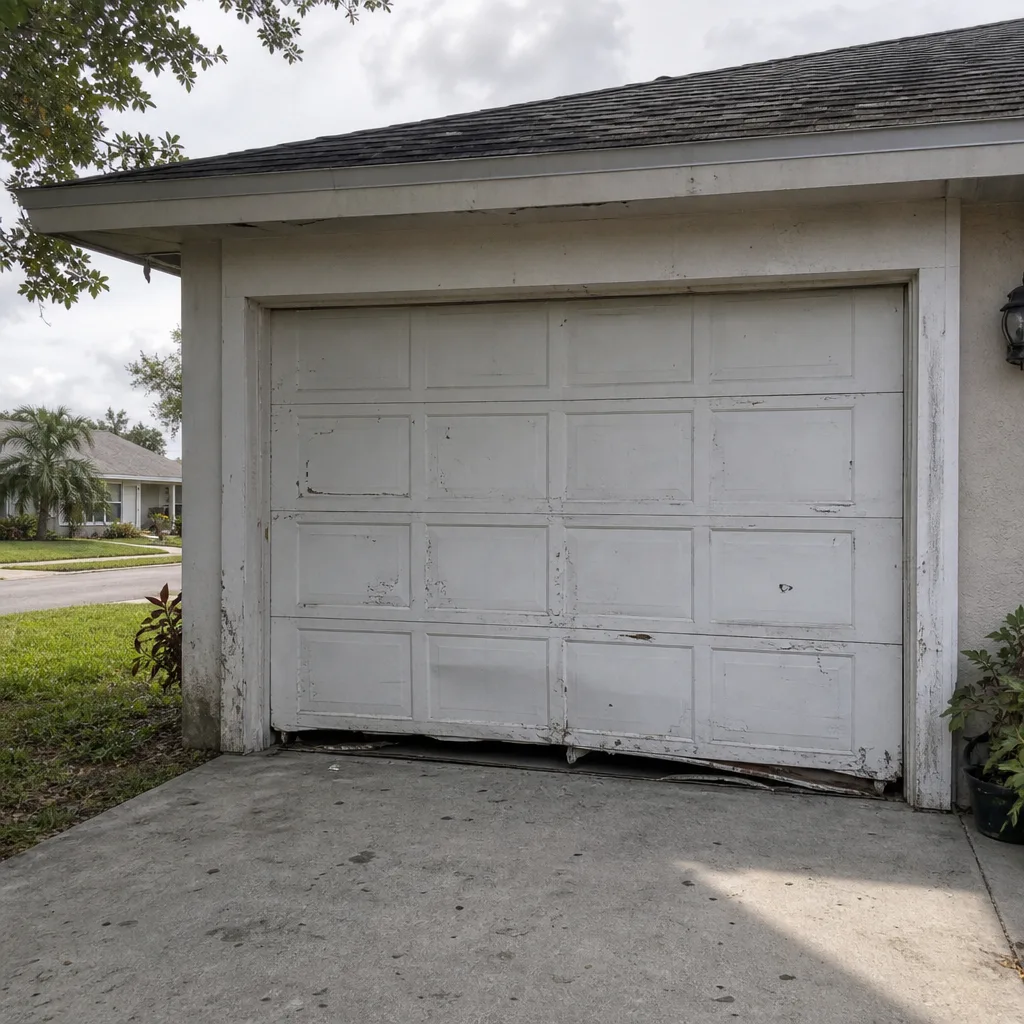 Before
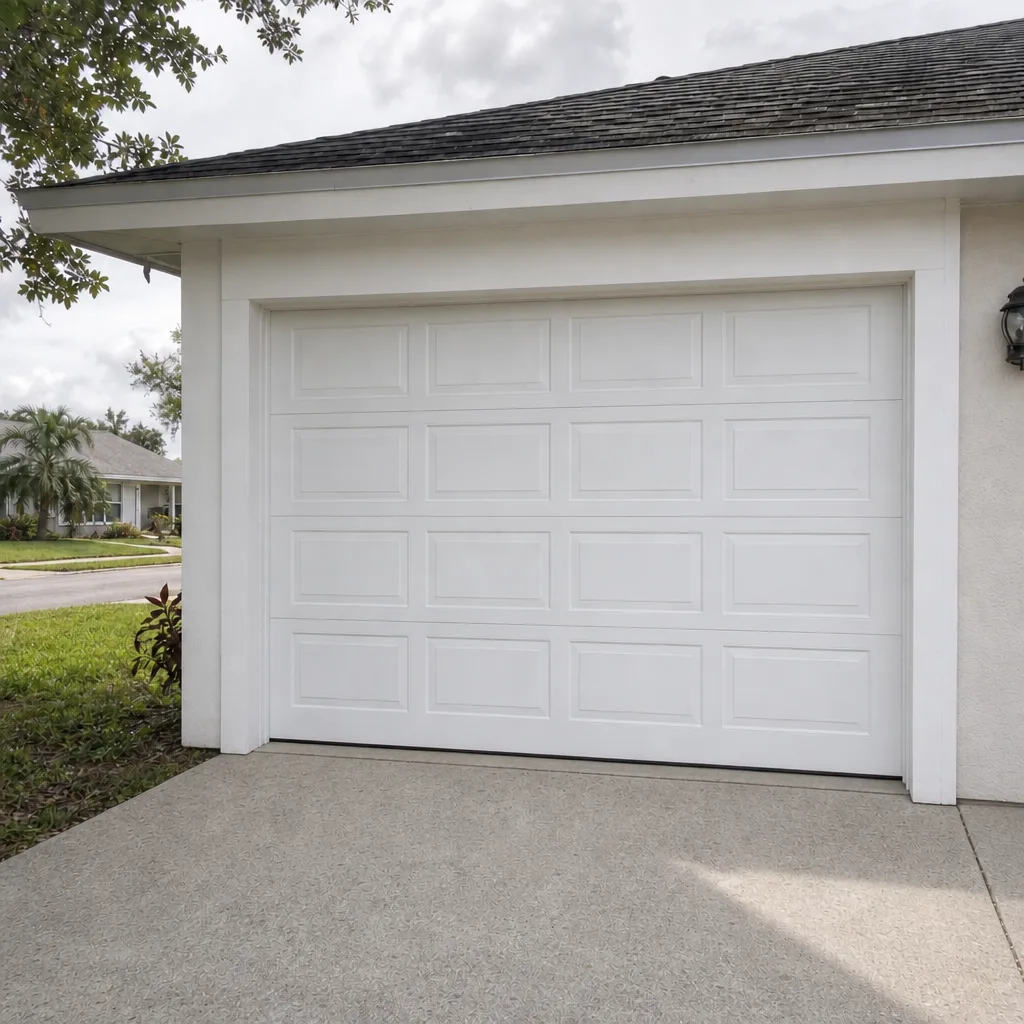 After
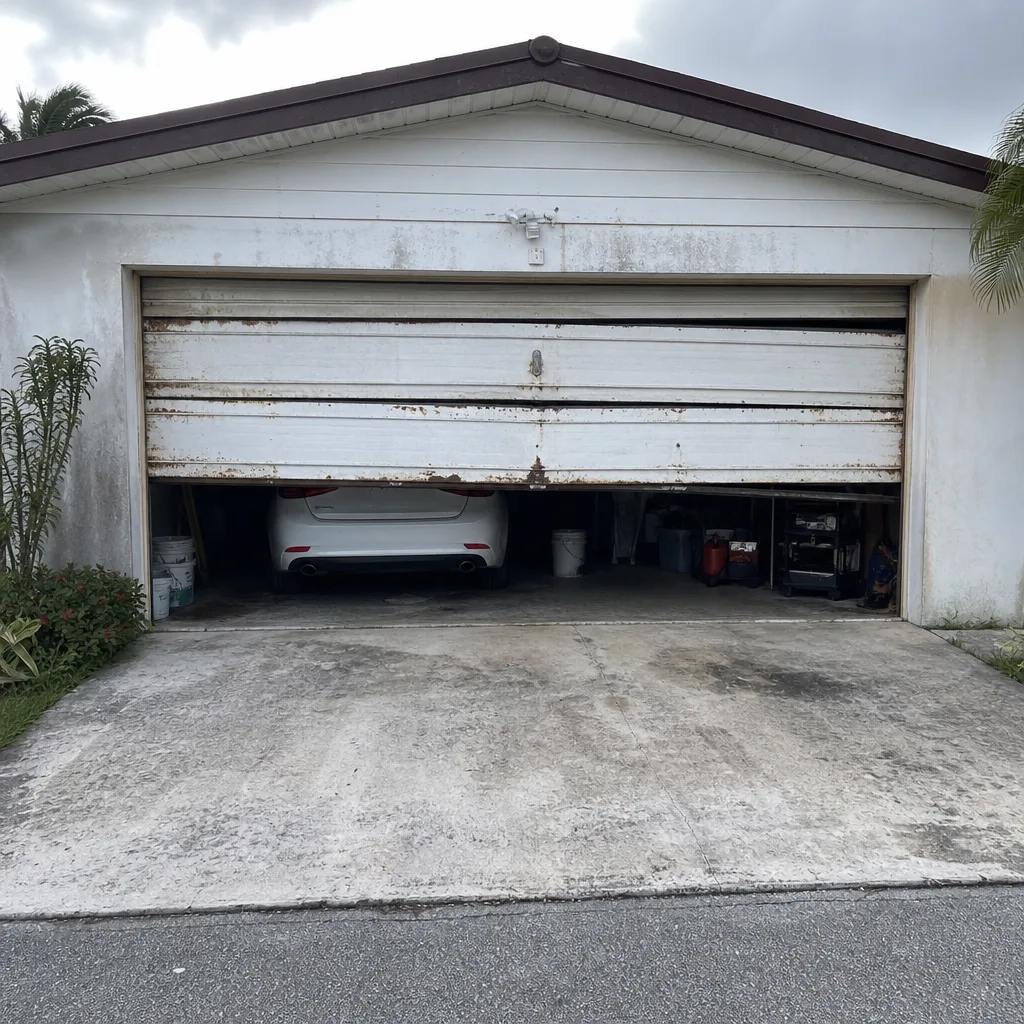 Before
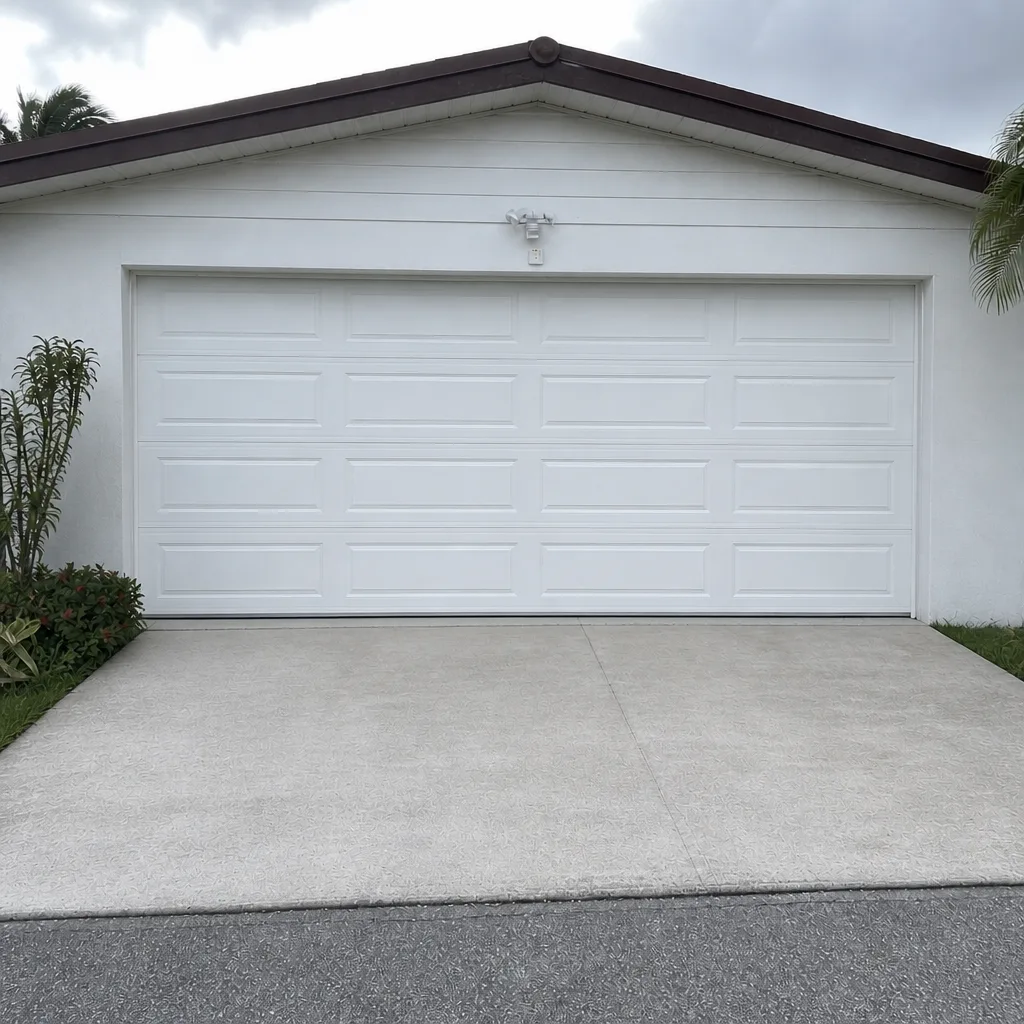 After
Garage Door Repair vs. Replacement in Delray Beach
Not every warning sign means “repair.” Some signal that the door is finished and the next step is a new one. The distinction matters for how you plan, and it also affects the timing: a new door is measured, ordered, and scheduled, while a repair can often be handled in a single visit. Here’s how we help homeowners draw the line.
Signs the door can be repaired
- One or two hinges are loose or worn.
- A single roller is binding.
- A torsion spring has broken and the door’s panels and track are sound.
- A cable needs replacing but the drum and springs are healthy.
- The opener misbehaved but the door itself cycles cleanly.
Signs it’s time to look at a new door
- Rust spreading along multiple panel edges, not just the bottom one.
- Panels that have physically dented or de-laminated in ways that can’t be repaired.
- A track system so warped or worn that realignment isn’t reliable.
- A door that’s clearly too heavy for the opener to lift reliably, even after a spring replacement.
- Smart-home needs your current opener can’t handle, like needing LiftMaster or Chamberlain compatibility for a home automation system you actually use.
If the answer is a new door, that work is measured, ordered, and scheduled – not something that happens the same morning you call. The right sequence is a free measure, a written price, and a date. If you’re exploring that route, start with garage door installation. We work with Clopay, Amarr, Wayne Dalton, and Raynor on new installs, which gives you a range from value-priced steel to premium panel designs without having to talk to four different companies. Ask about the warranty on the door itself and the labor before you say yes to a quote.
Opener replacement vs. opener repair
Opener repair is often the right call. A logic board, a capacitor, a gear drive, a remote pairing – all repairable on most modern openers, including smart-home-compatible LiftMaster and Chamberlain units. Replacement makes sense when the unit is failing repeatedly, when it can’t be made compatible with the software you need, or when the unit physically can’t handle a door of your size after a panel swap. Either way, ask for the diagnosis first and the price second.
Common Mistakes to Avoid
- Blaming the opener when the door is the problem. Openers in Delray Beach get replaced more often than they need to be, because a slow or stalling door is misdiagnosed as a motor failure. A careful diagnostic almost always starts with the door’s mechanicals and only afterward evaluates the opener.
- Treating white corrosion as cosmetic. White deposits on hinges and bolts are the earliest visible sign that metal is breaking down. Wiping them off hides the problem for a few weeks, but does nothing to slow the process underneath. A seasonal inspection catches them before they spread.
- Waiting for a loud noise. A failing component in Delray Beach’s humidity betrays itself in small ways long before it betrays itself in loud ones. Train yourself to notice small changes in the door’s behaviour – a slightly slower cycle, a tiny hesitation at the top – because that’s when repairs are cheapest.
- Ignoring the weatherstripping. The UV haze on the bottom seal is one of the cheapest problems to fix and one of the most expensive to ignore, because the failure cascades to the bottom panel and, from there, to the door’s structure. Look at the seal once a season.
- Cycling a door that might have a broken spring. If you hear a bang, or the door feels dramatically heavier than usual, do not pull the emergency release cord. The door may close under its own weight, and attempting to lift it manually is how many serious garage door injuries happen.
- Assuming the door can be repaired for a fixed price over the phone. Garage door repair pricing depends on the actual cause, and a phone diagnosis at a Delray Beach home rarely matches what a technician finds in person. Ask for a written estimate after the inspection, before any work starts – every legitimate repair company will give you that.
- Using a general handyman for springs, cables, or tracks. Springs and cables are high-energy components that require specialist training and tools, and many handymen rightly decline them. Use a garage door specialist for anything involving the door’s spring system.
When to Call a Professional
Call a professional for anything on the “stop the door now” list – a broken spring, a frayed cable, a door off-track. Call us when the door’s warning signs are non-emergency but persistent: grinding, slow opener behavior, rust or white corrosion, weatherstripping haze. Call when you want a seasonal inspection, or when you’re thinking about a new opener and want a straight answer about what’s actually repairable. And call when you’re ready to price a new door – Delray Beach Garage Door Repair Pros offers free estimates in Delray Beach – call (855) 393-4914. We service every door we install, our technicians have up to 10 years of experience, and the price you’re quoted is agreed before any work begins. You can also reach our team through Delray Beach Garage Door Repair Pros for scheduling and follow-up questions.
Frequently Asked Questions
Most grinding repairs run in the range of $150 to $400 depending on what’s failing – rollers, bearings, hinges, or some combination. In our experience, the more the door has been used since the noise started, the more likely a second component has worn too, which is why we recommend booking early. Call (855) 393-4914 for an exact quote – estimates are free.
Yes, for emergency situations like a broken spring, a cable failure, or a door that’s stuck open or stuck shut. Our emergency garage door service is a core part of what we do in Delray Beach, not an upsell. Call (855) 393-4914 and tell us what you’re seeing – a same-day slot is often available.
Two signals: a loud bang from above the door, or the door suddenly feels dramatically heavier than it used to when opened manually. Both mean a spring has snapped and the door should not be used until it’s repaired. Call (855) 393-4914 to schedule same-day repair.
No for quoted work. We give you a written estimate after inspection and before any work begins, and if the diagnosis is different from what we discussed, we tell you before agreeing a new price. The written estimate sets the final price. Call (855) 393-4914 to book a free estimate.
The local professionals we connect you with are licensed and insured as their state requires, and they carry the specialist training to work on springs and cables. Spring and cable work is the most technically demanding repair in our trade, and it’s not a job for a general handyman. Call (855) 393-4914 to discuss your repair.
Yes. Warm, humid air accelerates the corrosion of the zinc plating on hinges, bolts, and cables, so parts that would last years in cooler/drier climates wear faster here. The good news is that most of that wear shows visible warning signs – white crust, rust striping, surface haze on weatherstripping – well before it causes a failure. A seasonal inspection catches it early enough to be a small repair. Call (855) 393-4914 to schedule a check-up – estimates are free.
The Bottom Line
Nearly every garage door failure in Delray Beach gives its owner weeks of warning before the emergency call. Grinding, popping, rust striping, white corrosion deposits, slow opener behavior, and weatherstripping haze are all early-stage signals. Broken springs, frayed cables, and off-track doors are hard stops that need emergency service today. Learn to tell the difference, run a seasonal inspection, and you’ll keep your door out of the emergency-repair column for most of its working life. When it’s time for a specialist, the warnings map to a specific fix, and the fix comes with a written price before any work begins.
Written by the team at Delray Beach Garage Door Repair Pros.